
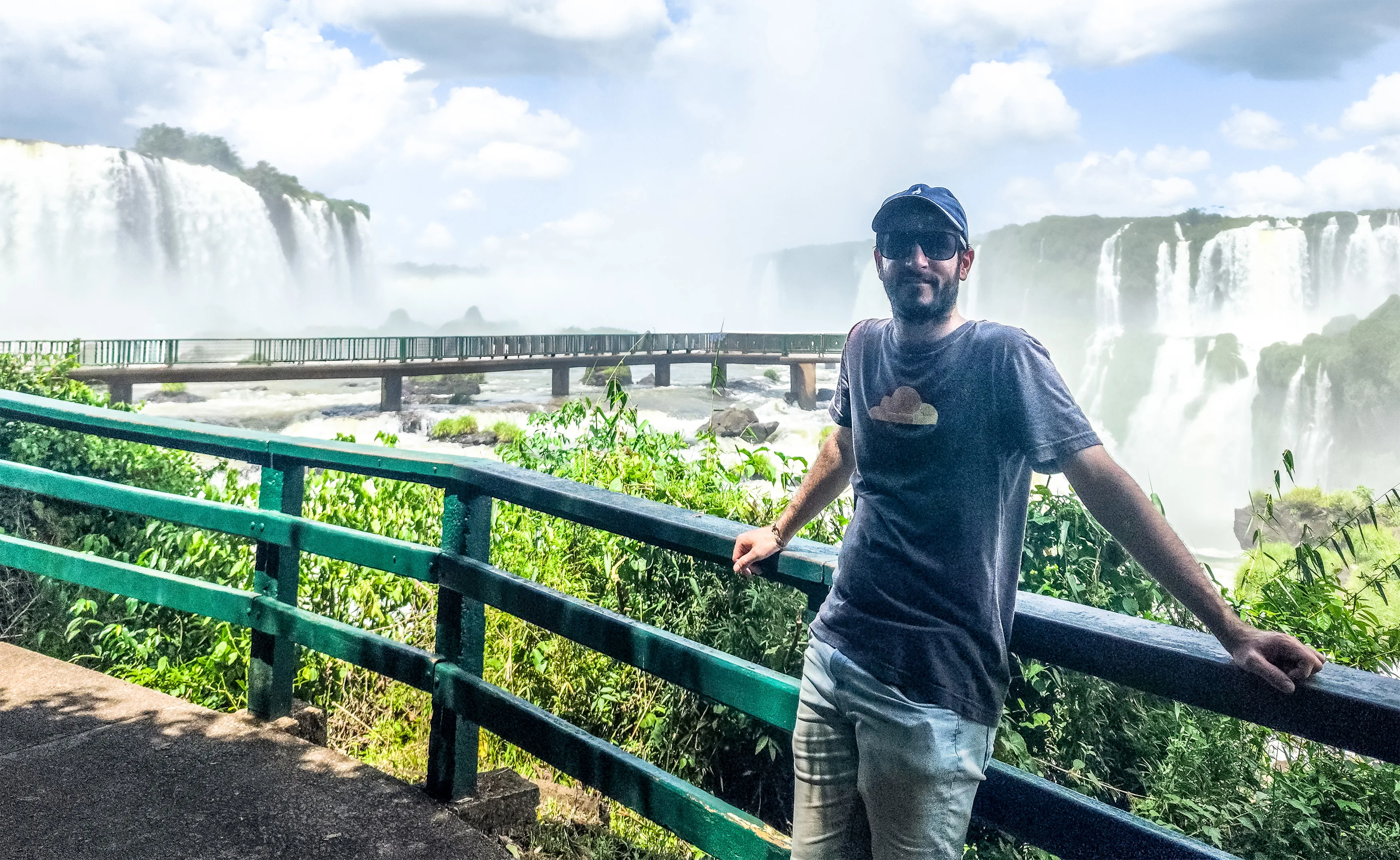
After staying a month in the capital of Argentina, I boarded an aeroplane and flew north right to the tri-border area between Argentina, Brazil and Paraguay (Triple Frontier). It’s an interesting place somewhere in the jungle. A bigger population living here, divided by rivers and countries. 3 international airports within a 10km range. Every country has their own. It’s a very touristy area for the Iguazu Falls, a UNESCO World Heritage Site and the world’s largest waterfall system. In the South, there’s the Argentinian side, the biggest part of the waterfall. It’s not the highest fall, but the widest and most impressive, therefore.
Crossing the bridge to the North, there’s Foz do Iguaçu, on the Brazilian side, which includes the other side of the waterfall since it’s shared by those two countries. Crossing another bridge to the East would lead to the most populous area, but the least touristy area of all these parts, Ciudad del Este in Paraguay.
Since I was coming from Buenos Aires, I had connections on an Argentinian flight via a domestic flight. So I stayed 2 nights on the Argentine side, while exploring that part of the town and the waterfall.
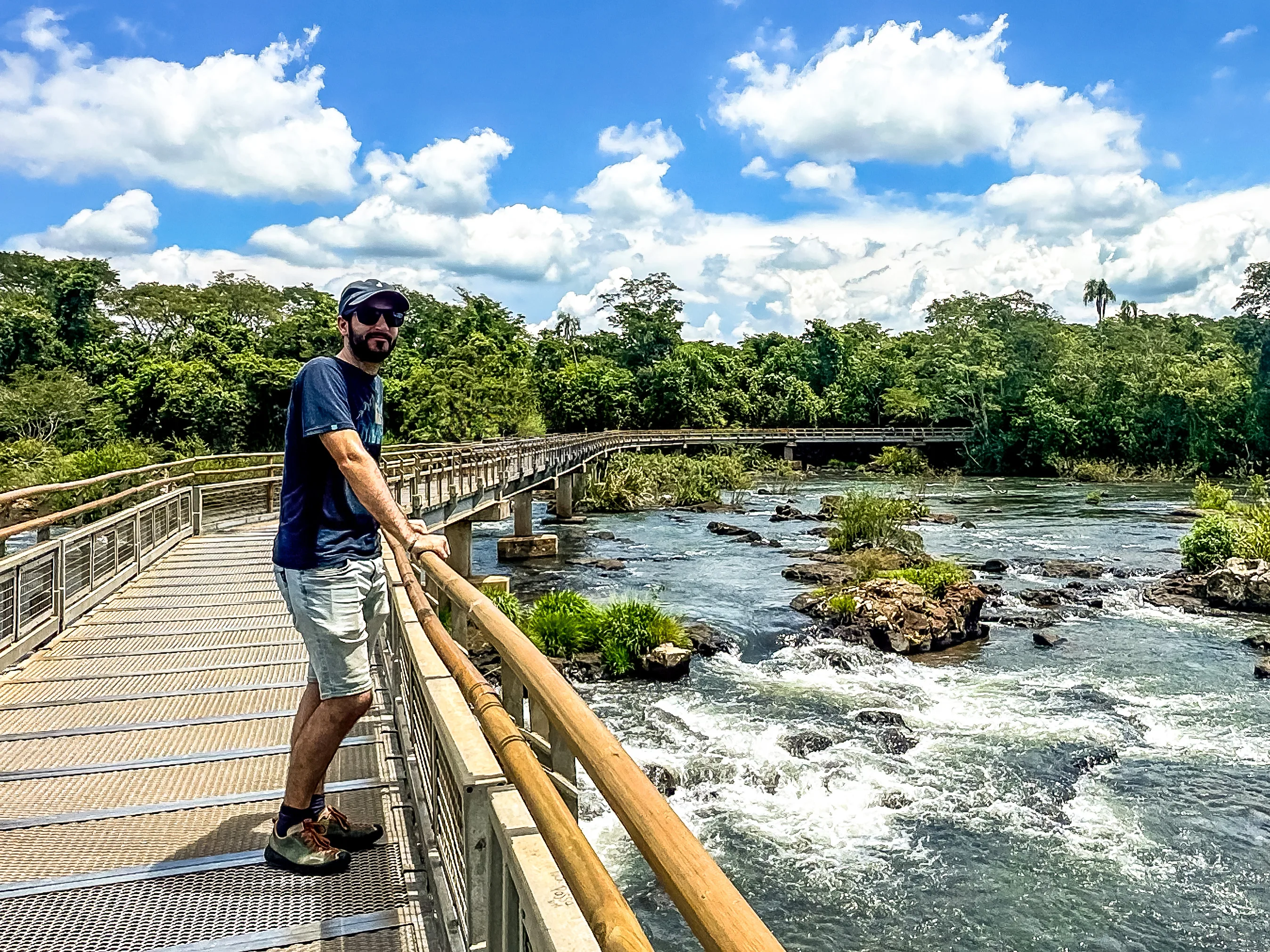
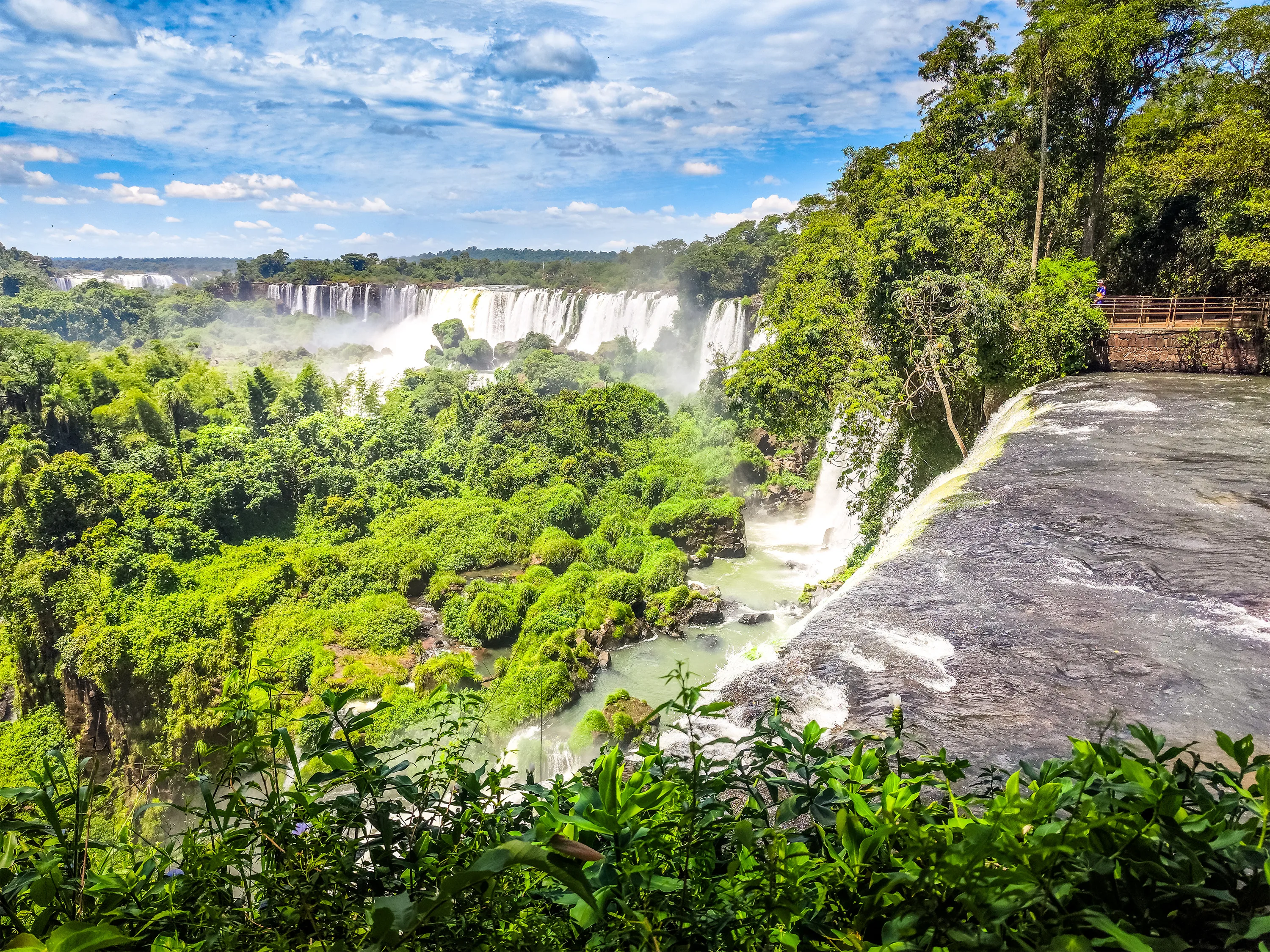
The Argentinian side of the waterfall
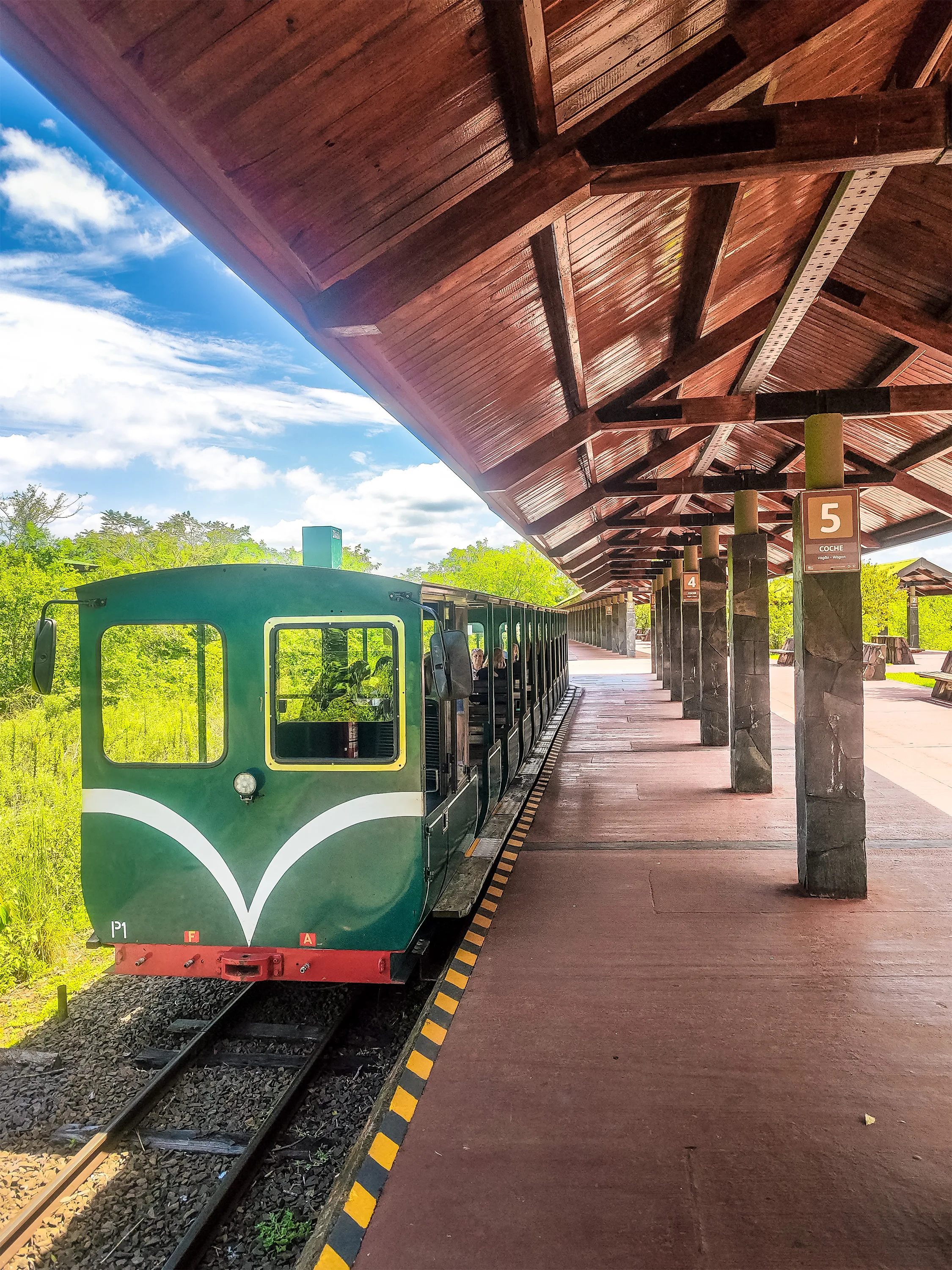
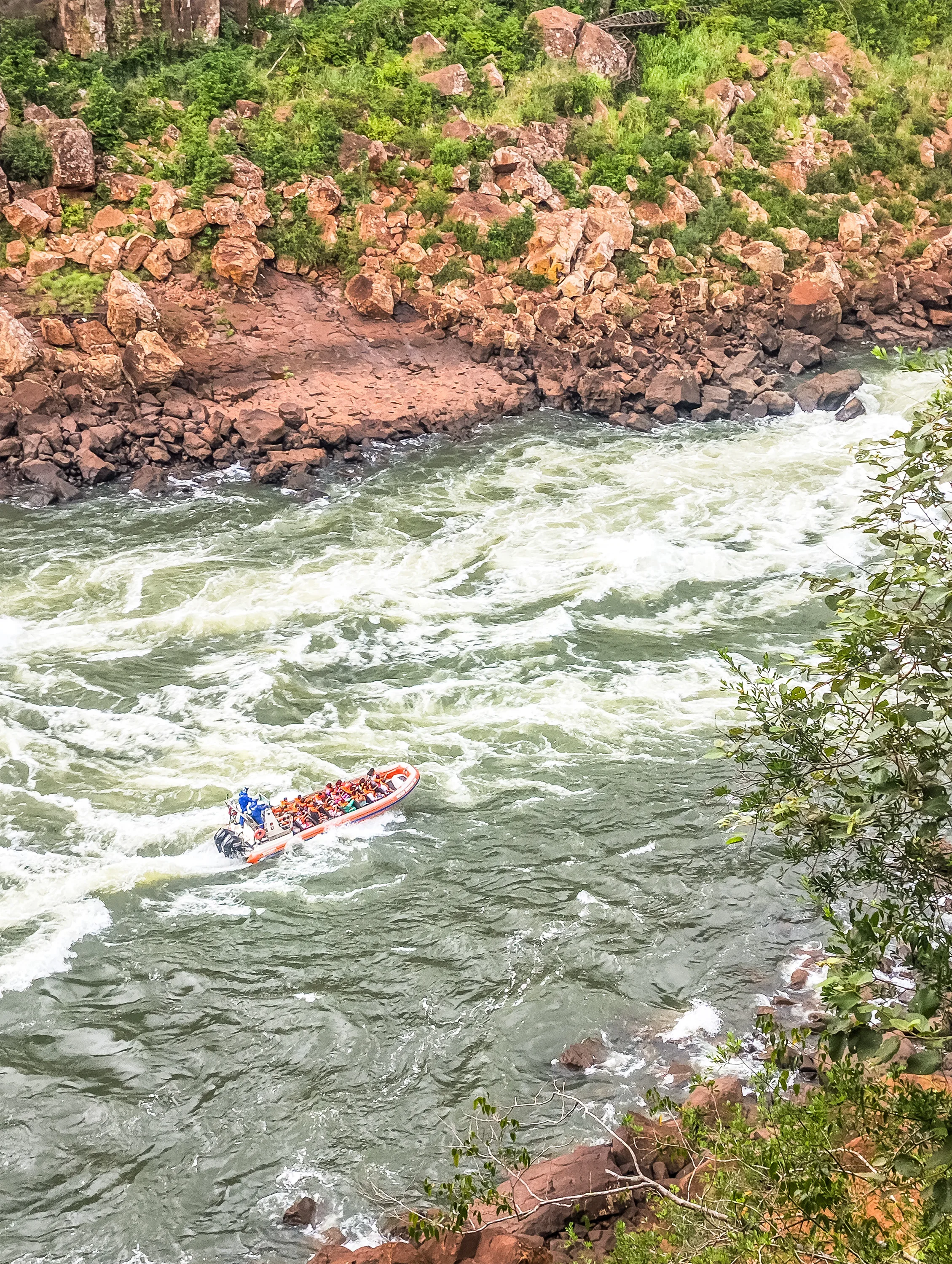
After entering Iguazú National Park, there are several hiking and walking routes. Shorter and longer once. Everyone can decide what suits them best. There are also river tours that go upstream by boat, closer to the waterfall below. This didn’t seem that safe to me, so I opted out of it. Instead if took different paths around the waterfall. People say the Argentinian side needs at least 2 days to visit. I don’t agree to that. I made it in less than 5 hours without rushing. So, in my opinion, a one-day ticket was enough to explore the Argentinian side, which is the bigger of the two. More paths and areas to explore. There’s also a small train that takes you out to the actual big falls, which is quite a walk from the entrance.
Arrived at the upper part of the falls, there’s a big river system. So the paths are elevated above the river system and trees. It’s quite nice to walk this, and sometimes in between the trees, which provides shade. During the day, it can be quite hot. The paths wind along the edge of different, smaller waterfalls. In the back, the big waterfall is visible, and you walk towards it. At some point, there’s more and more water and fewer trees. The elevated paths lead out to a viewpoint just at the edge of the massive 80m-high waterfall. You really feel the force, but the view actually isn’t that spectacular because you’re right above it. From the side, it was more beautiful and relaxed. Out on the main platform, it’s full of people taking their selfies.
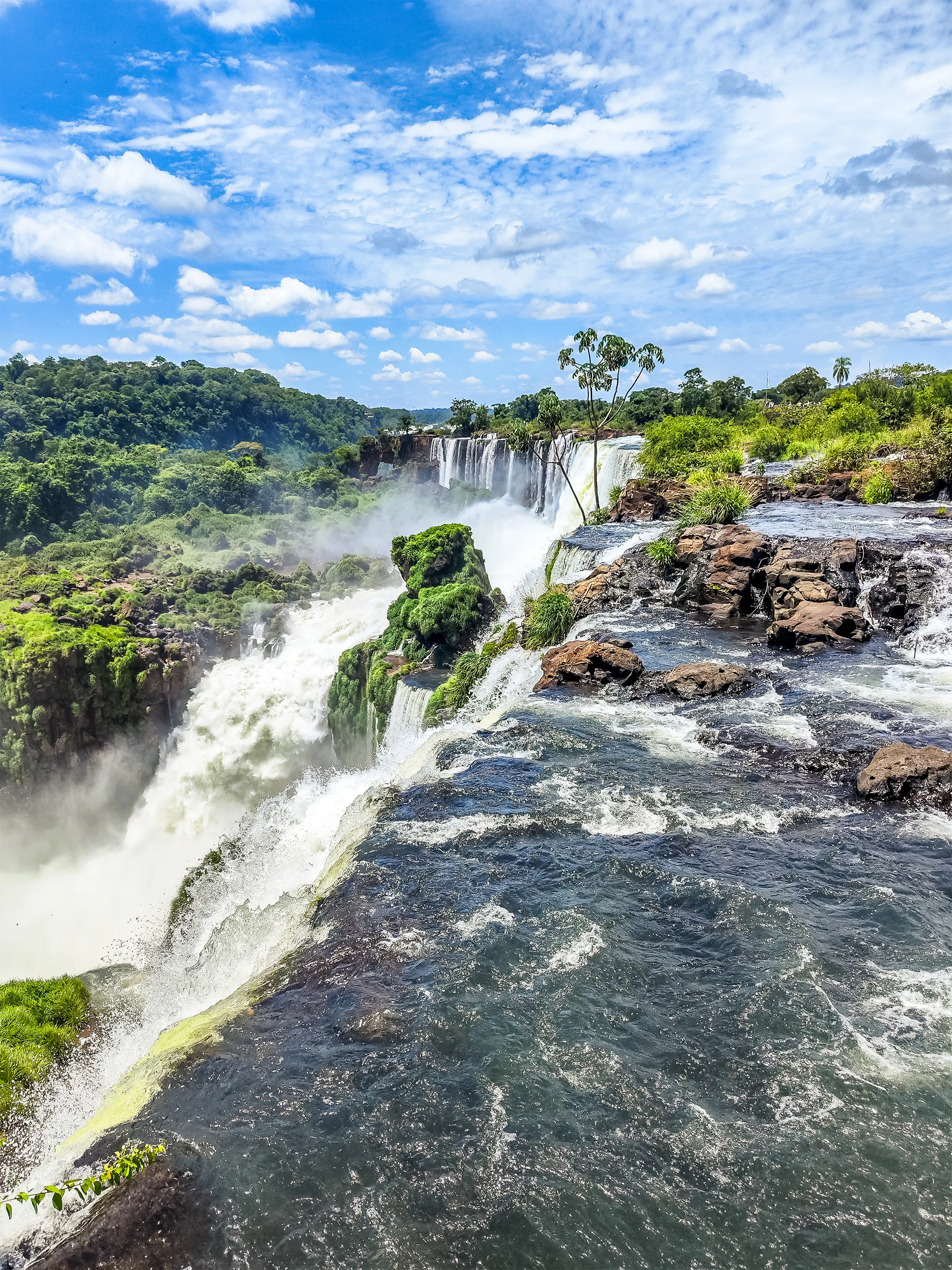

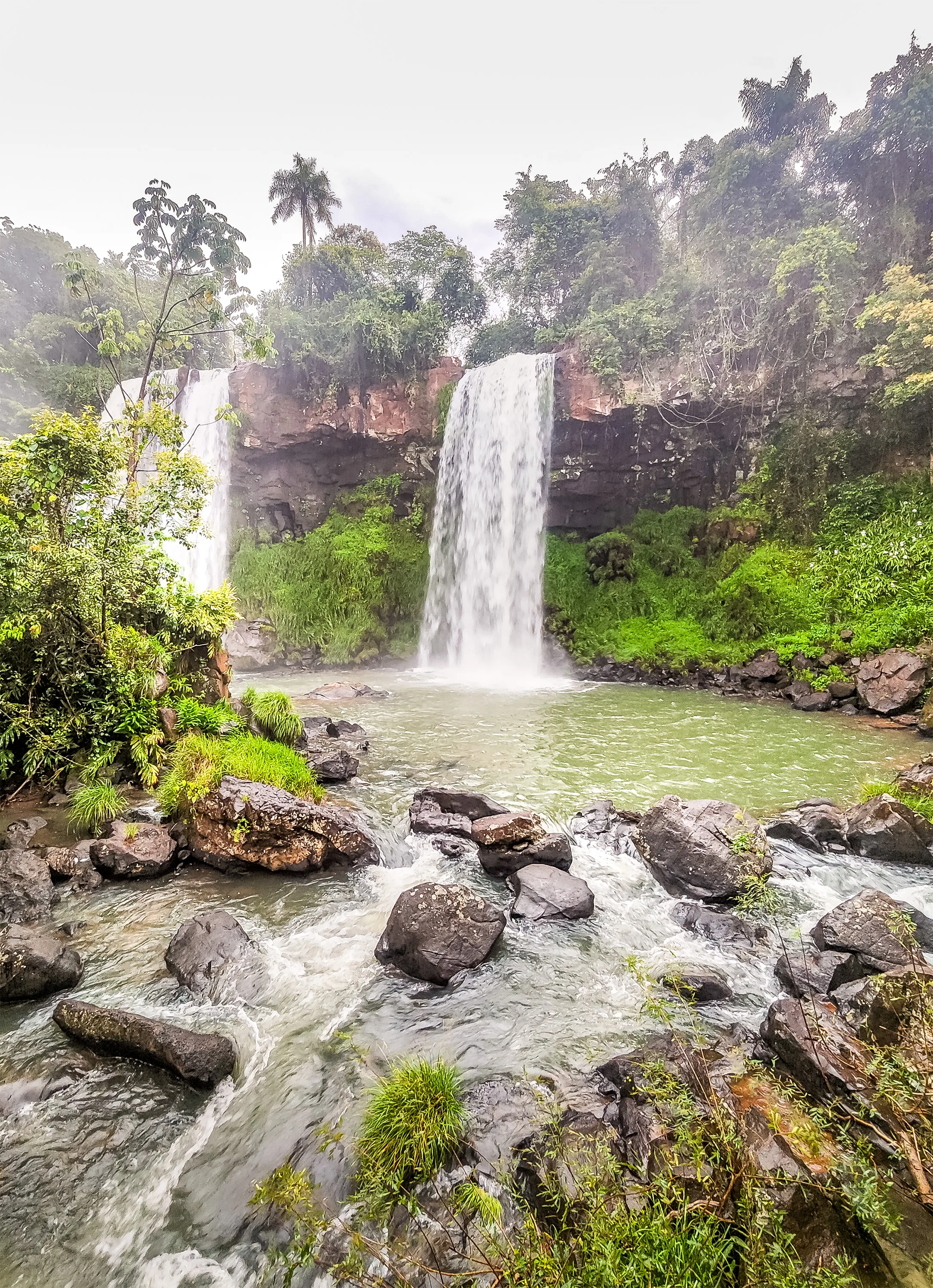
In the afternoon, the weather switched in no time; we’re in the tropics. Clouds appeared, and it started to rain. Nevertheless, I wanted to also explore the lower paths. While the upper paths were even wheelchair-accessible, the lower ones were definitely more exhausting. Have to climb quite a few stairs and quite a few elevations. You can’t reach that close to the waterfall, but the view is better, because the waterfalls can actually be seen. While on the upper paths, you’re above the edge of the waterfall and can’t really see the water falling down. Both routes are special, and overall, it’s definitely something very nice to see.
After those hikes in the national park and getting wet in the end, I returned to the hotel. It was a nice resort right on one of the big rivers. On the other side of the river is Paraguay. The river marks the border.

Foz de Iguaçu, Brazil
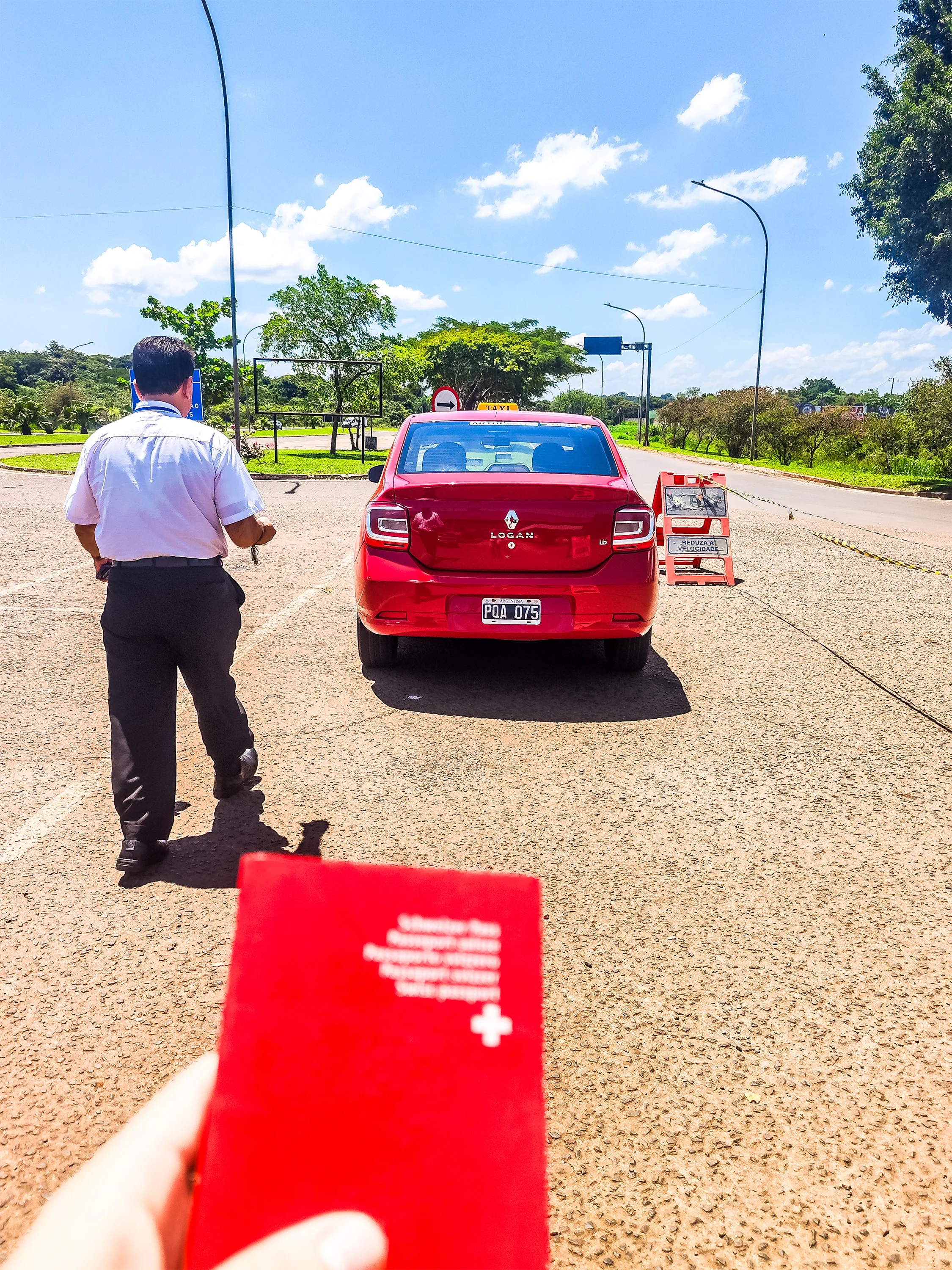
The next day, I booked a taxi and headed over to the Brazilian part of the area. This marked a first. Crossing a border in a taxi. It was quite interesting. Basically, leaving the taxi, walking through immigration and hopping into the same taxi again, which brought me to the next hotel. In this part, the differences between Argentina and Brazil are very visible. Since Argentina is experiencing very high inflation again, prices are super high. I come from the Argentinian side, so I had to get a taxi from Argentina, while the one in Brazil would be about 10x cheaper. Also interesting was the real-world comparison with the hotel. My taxi driver saw my accommodation on the Argentina side, where he picked me up, and also the one in Brazil. When I told him the one in Brazil is actually cheaper, he was shocked. The one in Brazil is located in a large area surrounded by golf courses and private villas for rent. A proper 5-star resort.


After arriving, I wanted to head to the Triple Frontier, where there’s a Ferris wheel with a pretty nice view over the area. But to my bad luck, I exactly went there on their day of rest. I just figured that out after the taxi dropped me. Good that on this side of the border Uber is working again. On the Argentinian side, online healing apps were strictly forbidden and therefore the prices were just crazy, on top of the inflation. So in Brazil, it feels super cheap. Stranded outside in the middle of nowhere, I was lucky to find an Uber driver who accepted me and picked me up. It was a BYD electric car. It was the first time I’ve sat in one of these. The driver was super fun and an IT guy who’s driving Uber for fun. He could speak some English, which isn’t that usual in these parts of the world, so it was a fun drive. He dropped me in the centre of Foz do Iguaçu, where I went for a coffee and later into a shopping mall to search for a SIM card, cash and a local soft drink called “Guaraná”. If you’ve followed along here for a while, you know I love trying local and unique soft drinks, this was definitely one of these situations.
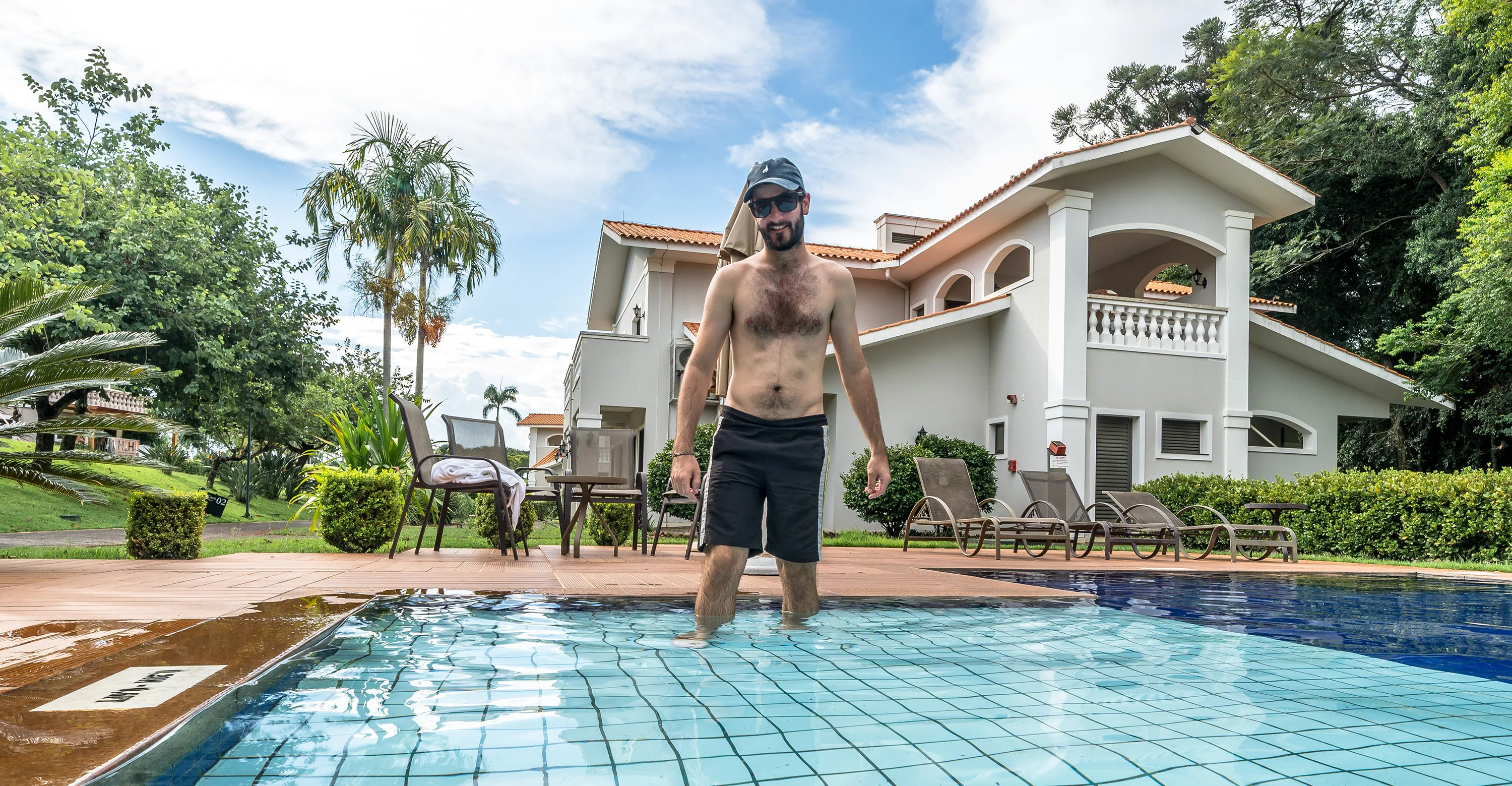
The next day, I had a rest day planned, doing nothing. Enjoying the facilities of the resort. The nice breakfast buffet, the swimming pool, and just having a walk around the big resort. Also, it was time to get my SIM card working. Things aren’t that easy. First, most providers had a system outage and couldn’t register international clients. Then I found a SIM card I can buy and later need to register. So I had to call a hotline (always annoying) and enter my passport number. They registered it with a completely wrong spelling of the name, but it was working. What a useless process.
The Brazilian side of the waterfall
On the last day in “Foz”, it was finally time to explore the Brazilian side of the Iguazu Falls. Checking out of the hotel early, leaving the luggage at their storage space and heading to the site. After the entrance, a bus picked me up to drive me to an area from which you can hike down to the viewing platform. That day, I felt quite bad, I guess because of the AC, I caught the flu and felt very weak. My body was in pain, but there was no way around it. It was the last day out of the hotel, no time to rest and in the evening a flight to catch. So I continued walking down the path. On the way a couple of pretty funny animals cross the way or search for food along the way. I’m talking about “South American coati”, I wasn’t sure what kind of animals they are and had to do some research.

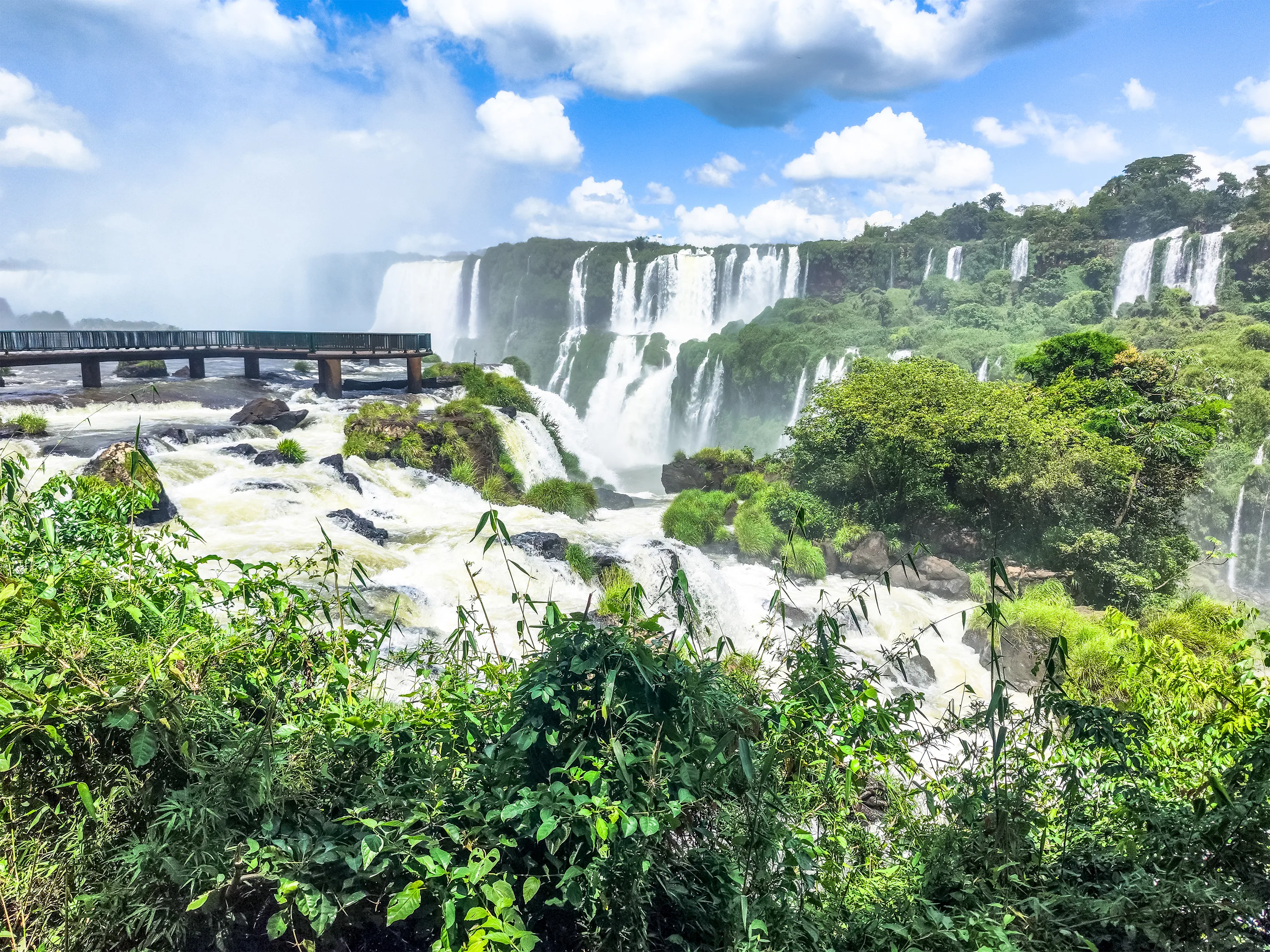
Arrived at the lower part, there’s a pathway along the river with a breathtaking view. Towards the end, there’s a footbridge to a viewpoint just below the waterfall. While something like that existed on the Argentinian side just above the waterfall, it is below the waterfall on the Brazilian side. You’ll definitely get wet walking onto it. The full force of the water falling down is experienced at this point. I personally preferred the Brazilian side. Actually, less touristy, cheaper, shorter and a better view. Nevertheless, I would recommend doing both. It was just funny since there’s a bit of a debate going on between Argentinian and Brazilian civilians who argue over which side is better.
The Brazilian part is definitely way smaller and doable in 2-3 hours. I also wouldn’t have more time, because I needed to catch a flight to Rio de Janeiro in the late afternoon. So, time to get to the hotel, grab the luggage and head to the airport. It’s all close by, and I planned it accordingly.